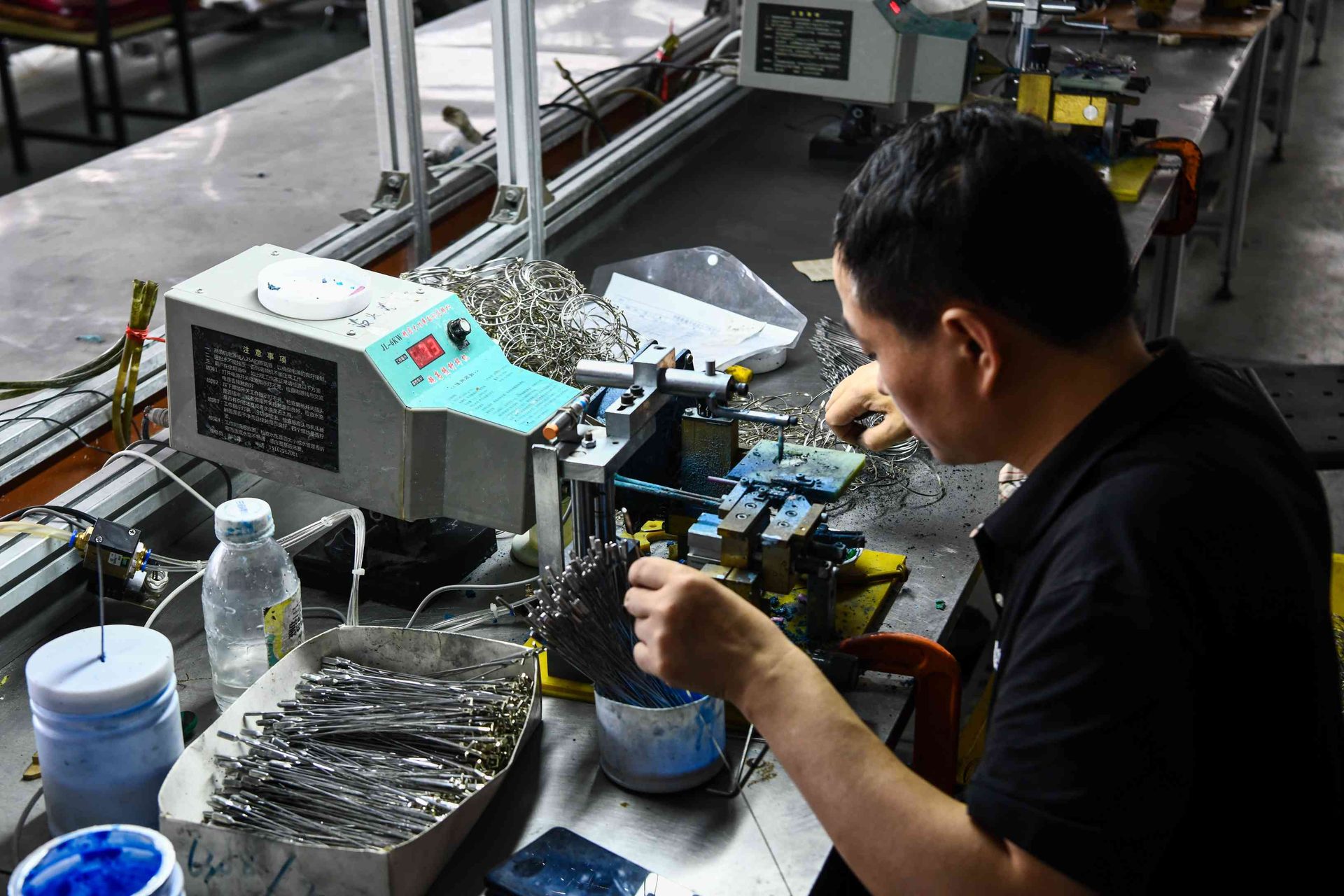
Metal frames look minimal because much of their engineering is hidden. A thin rim, bridge, two endpieces and a pair of temples must be formed consistently, joined without pulling the front out of shape, finished without obscuring details, and adjusted so the completed frame sits symmetrically. A good quotation therefore defines more than “metal” and a color.
Direct answer: metal eyewear is normally built from multiple wire, sheet, tube or machined components. The factory forms each part, joins the frame front and temples with a process matched to the alloy, smooths and polishes the surfaces, applies the specified finish, assembles the hardware and aligns the complete frame. Buyers should release the material, drawing, joint method, finish stack and inspection criteria together—not approve appearance alone.
Choose the metal as a component system
| Material family | Why a designer may choose it | Manufacturing point to control |
|---|---|---|
| Stainless steel | Thin profiles, strength and corrosion resistance | Grade traceability, springback, joint quality and coating compatibility |
| Nickel-containing copper alloys | Formability and established decorative-finishing routes | Exact composition, nickel exposure/release and destination-market limits |
| Titanium and beta-titanium | Low weight, corrosion resistance and resilient temple options | Verified grade, specialist forming/joining and disciplined surface preparation |
| Aluminum | Low weight, machined shapes and anodized color possibilities | Section design, thread/joint strategy, anodizing consistency and adjustability |
| Mixed-material construction | Balances appearance, weight, flexibility or cost by component | Galvanic compatibility, interfaces, color matching and repair method |
“Metal frame” is not a sufficient bill-of-material description. State the alloy or supplier grade for the rim, bridge, endpieces, pad arms, temples, core hardware and decorative parts. A metal front with acetate tips or beta-titanium temples is a different system from a single-alloy frame. Compare the broader options in the eyewear frame material guide, and use the titanium eyewear guide when titanium is the main construction.
The metal-frame production sequence
1. DFM and component definition
The manufacturer converts the design into producible parts. Rim profile, eyewire closure, bridge and endpiece geometry, pad-arm position, hinge seat, temple section, lens shape and assembly clearances must work together. The drawing should identify critical datums instead of leaving fit to a rendering.
2. Material receipt, cutting and forming
Incoming stock is checked against the purchase specification and separated by grade. Wire, sheet, tube and profiles are cut, blanked, stamped, bent or machined as required. Forming tools control repeated curves and left-right symmetry; springback must be compensated by the validated process rather than hand-corrected inconsistently.
3. Joining the frame
Bridges, endpieces, eyewires, hinges and pad arms may use brazing, soldering, resistance welding, laser welding or another validated method. The label matters less than compatibility with the alloy and joint. Fixtures hold position while heat input, filler, surface preparation and joint clearance are controlled.
Inspect for incomplete joints, excess filler, pits, cracks, burn-through, mislocation and heat distortion. Cosmetic polishing must not be used to erase evidence of a structurally weak joint.
4. Deburring, polishing and cleaning
Cut edges and joining residues are removed before finishing. Progressive grinding and polishing establish the required surface—bright, satin, brushed or prepared for a coating—without thinning a rim or rounding a designed edge beyond the drawing. Cleaning is critical because oil, compound and oxide can undermine later finish adhesion.
5. Plating, coating or anodizing
The decorative color is a process stack, not just a color name. Record base preparation, any intermediate layers, the visible finish, gloss or texture, masked areas and acceptable color reference. The suitable stack depends on alloy, intended use and regulatory plan. The eyewear color-matching guide explains how to approve a physical finish standard instead of relying on a screen value.
6. Assembly, alignment and release
After finishing, the factory installs screws, hinges, nose pads, temple tips, logos and specified lenses. The frame is aligned for level rims, symmetric bridge and pad position, equal temple opening, appropriate closure and stable four-point presentation on the inspection surface. Assembly should not scratch the finish or introduce stress at the lens interface.
What belongs in the OEM specification?
Add these items to the eyewear tech pack:
- alloy or controlled material designation for every metal component;
- component drawings, thicknesses, profiles, datums and critical dimensions;
- approved joining method and locations, plus prohibited visible defects;
- finish stack, color reference, gloss or texture and masking boundaries;
- hinge, screw, pad-arm, nose-pad and temple-tip specifications;
- lens interface, eyewire closure and assembly sequence;
- alignment, functional, cosmetic and market-verification requirements;
- drawing, bill-of-material and sample revision that governs production.
Avoid ambiguous instructions such as “premium metal,” “gold plating” or “strong weld.” They do not identify the alloy, layer system, appearance boundary or acceptance method.
Approve samples by process stage
A polished sample may combine hand work, substitute stock or a temporary finish. Ask the supplier to declare what differs from production. Use early samples to correct geometry, then approve a production-intent sample made with the intended materials, tools, joining route, polishing direction, finish stack and hardware.
During the custom eyewear sampling process, record joint and finish changes as numbered revisions. If a color correction changes surface preparation or coating thickness, recheck hinge seating, eyewire closure, screw engagement and lens fit rather than treating it as a purely visual update.
Bulk quality-control checklist
| Check | Practical evidence |
|---|---|
| Material | Purchase specification, lot identification and agreed supplier evidence |
| Geometry | Critical dimensions, rim shape, symmetry, temple opening and alignment |
| Joints | Correct location, continuous appearance, no cracks, pits or harmful distortion |
| Edges | No burrs or unintended sharp contact points |
| Finish | Approved color/texture, complete coverage, clean masking, no peeling or exposed base metal |
| Assembly | Smooth hinge action, secure hardware, aligned pads and correct lens seating |
Sampling plans and defect classes should be agreed before inspection. Add model-specific risks to the pre-shipment eyewear inspection checklist, but use in-process checks after forming, joining and finishing as well; a final inspection cannot reconstruct which process created a hidden weakness.
Verify compliance for the destination market
Metal composition, nickel release, coatings, optical function, mechanical safety, labeling and documentation may be regulated differently by product type and market. A supplier’s general material statement is not automatically evidence for the finished model, and a finish change can alter the verification rationale.
Before bulk production, have the importer, responsible economic operator, qualified laboratory or compliance adviser confirm the current requirements and test plan for every destination. The eyewear certifications guide is a starting point, not legal advice.
For a process review, send HAO Eyewear your target material, drawings or reference frame, finish direction, quantity and sales markets. Discuss a metal eyewear OEM/ODM project before releasing the production specification.