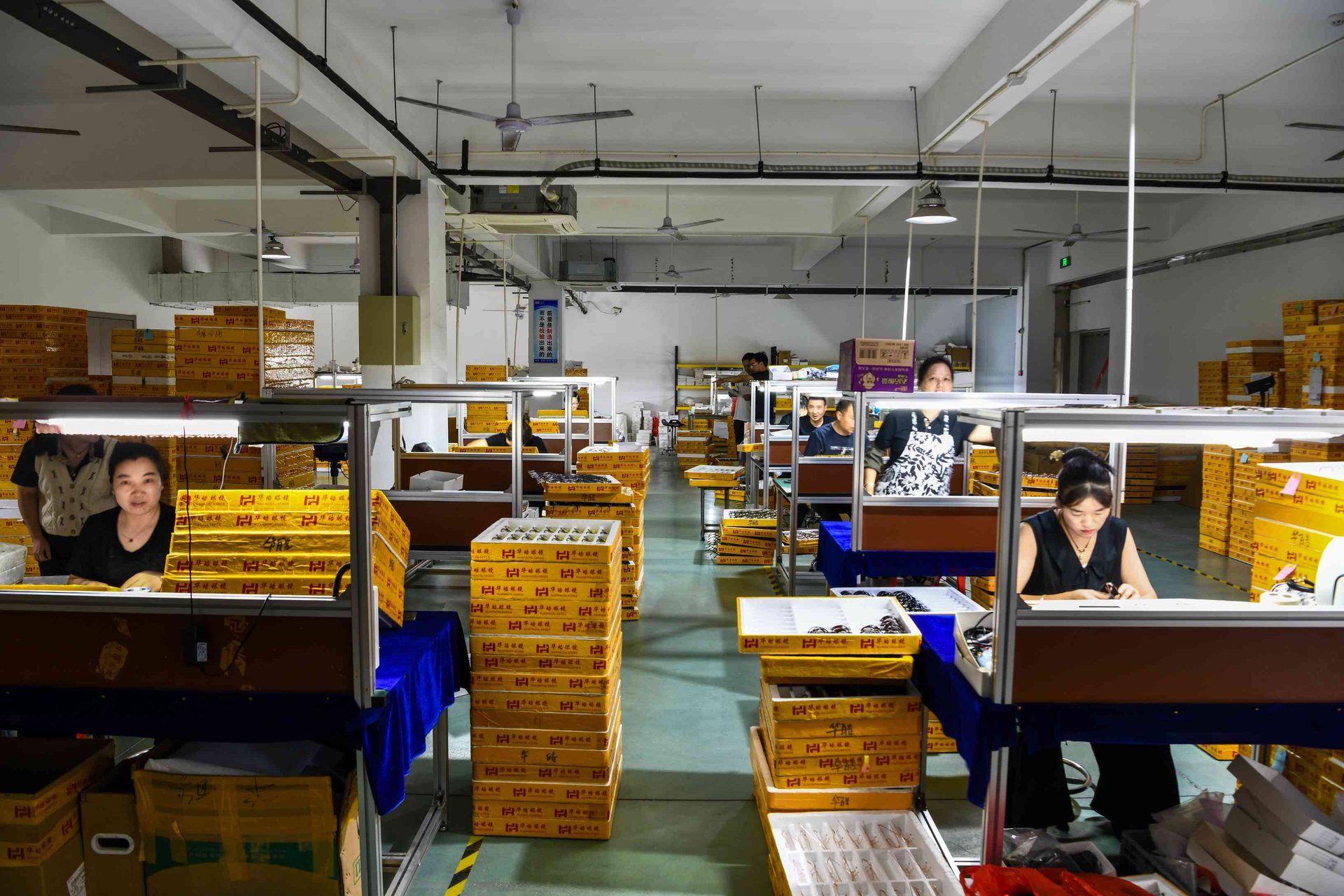
“How many days?” sounds like a simple sourcing question, but an eyewear order has several clocks. Product development, material preparation, tooling, bulk manufacturing, inspection, market verification and international transport may overlap—or one unfinished approval may hold up everything behind it. A useful answer therefore describes milestones and dependencies, not just a delivery date.
Direct answer: custom eyewear production takes as long as the project’s critical path. Define exactly when the clock starts, separate development from bulk production and freight, and ask the manufacturer to show each approval gate. Existing-tool private-label work generally has fewer dependencies than a new OEM frame, but the actual schedule must be confirmed against the design, materials, quantity, capacity and destination markets.
Compare lead time by development route
| Route | Work before bulk production | Main schedule risks |
|---|---|---|
| Ready stock | Product selection, availability check, order and packing confirmation | Inventory changes, mixed-model consolidation and label or carton readiness |
| Private label on an existing model | Logo artwork, color/component choices, branded packaging and approval sample | Artwork revisions, special finishes and packaging supply |
| ODM customization | Existing design adapted within a validated construction and tooling system | Component compatibility, color sampling and requested structural changes |
| New OEM design | DFM, drawings, materials, possible tooling, prototypes and production-intent approval | Tool correction, repeated fit changes, custom material and process validation |
The route should match the launch objective. The OEM, ODM and private-label comparison helps define how much product development the schedule must contain.
Define when the clock starts
Write the release condition into the quotation or purchase order. Depending on the project, it may require:
- confirmed commercial terms and purchase order;
- released drawing, eyewear tech pack and bill of materials;
- approved frame, lens, hardware, logo and packaging artwork;
- approved physical color or finish references;
- a signed production-intent or golden sample;
- confirmed test plan, shipping terms and delivery destination.
Separate three dates: target launch, required delivery and factory release. Working backward from the launch exposes whether the requested factory date is realistic. It also prevents “lead time” from meaning production in one email and door-to-door delivery in another.
Build the schedule from real production gates
1. Feasibility and specification release
The supplier reviews frame geometry, lens interface, materials, hardware, finish, branding, packaging and target markets. Open decisions are logged before capacity and procurement are confirmed.
2. Material and tooling readiness
Standard components may be available; custom acetate, lens treatments, metal finishes, hardware, cartons or molds may require their own procurement or development paths. If the design needs a new asset, define ownership, trials and approval in the custom eyewear tooling guide.
3. Sampling and approval
Early appearance samples are not necessarily production-ready. Geometry, color, branding and packaging may be approved at different gates. The custom eyewear sampling process explains how a controlled golden sample becomes the bulk reference. Schedule at least a deliberate decision point for every revision; do not assume feedback is instantaneous.
4. Bulk manufacturing
The route can include cutting or molding, forming, joining, polishing, coloring or coating, lens preparation, printing, assembly and alignment. Some steps can run in parallel, while others require the preceding output. The supplier should identify the current bottleneck rather than promise that every operation begins at once.
5. Verification, inspection and packing
Book required laboratory or market-verification work early enough for review and, if necessary, corrective action. Bulk inspection should use the released specification and agreed defect rules. Packaging must be ready before final packing, so connect the schedule to the custom eyewear packaging guide and the pre-shipment inspection checklist.
6. Freight and delivery
Production completion is not customer delivery. Add pickup, export handling, main carriage, import clearance and final delivery using the chosen Incoterm and current forwarder plan. The eyewear import guide explains the handoffs, but your broker or logistics provider should confirm the live route, documents, restrictions and timing.
Five controls that prevent avoidable delay
- Use one controlled specification. Put drawings, BOM, artwork and sample status under revision numbers.
- Name an owner and deadline for every approval. Buyer delay and supplier delay should be visible separately.
- Freeze changes after production release. Assess any exception for cost, scrap, rework, retesting and date impact before acceptance.
- Track the critical path, not percentage complete. A finished carton does not help if the approved lens is unavailable.
- Update assumptions in writing. Capacity, material status, tests, inspection and freight bookings can change; the schedule should record what has actually been confirmed.
What to request in a lead-time quotation
Ask each supplier to return the same schedule fields:
| Field | Required answer |
|---|---|
| Start condition | Documents, approvals and payment/commercial events required |
| Milestones | Tool or material readiness, sample approval, bulk start and finish |
| Dependencies | Buyer decisions, suppliers, laboratory, packaging and logistics |
| Release point | Ex-works completion, inspection release, handover or another defined event |
| Change rule | Who approves a change and how date impact is recorded |
| Recovery plan | Actions available if a named milestone slips |
A schedule without inputs and assumptions is only a target. Ask for evidence appropriate to the milestone—approved files, material status, sample sign-off, inspection result or freight booking—without demanding confidential production records unrelated to your order.
Protect quality and compliance while accelerating
Reducing queue time, choosing validated components or returning feedback faster can shorten the critical path. Skipping an unresolved fit review, finish validation, required test or final inspection merely moves risk toward the launch. Optical function, frame materials, coatings, labeling and documentation can be governed differently by product type and sales market.
Before release, have the importer, responsible operator, qualified laboratory or compliance adviser confirm current requirements, sample selection and documentation for each destination. Treat any date change that affects materials, construction or testing as a reason to recheck the verification plan.
For a project-specific schedule, send HAO Eyewear the development route, drawings or reference model, materials, finish, quantity, packaging, target markets and required delivery date. Discuss an eyewear OEM/ODM production plan.