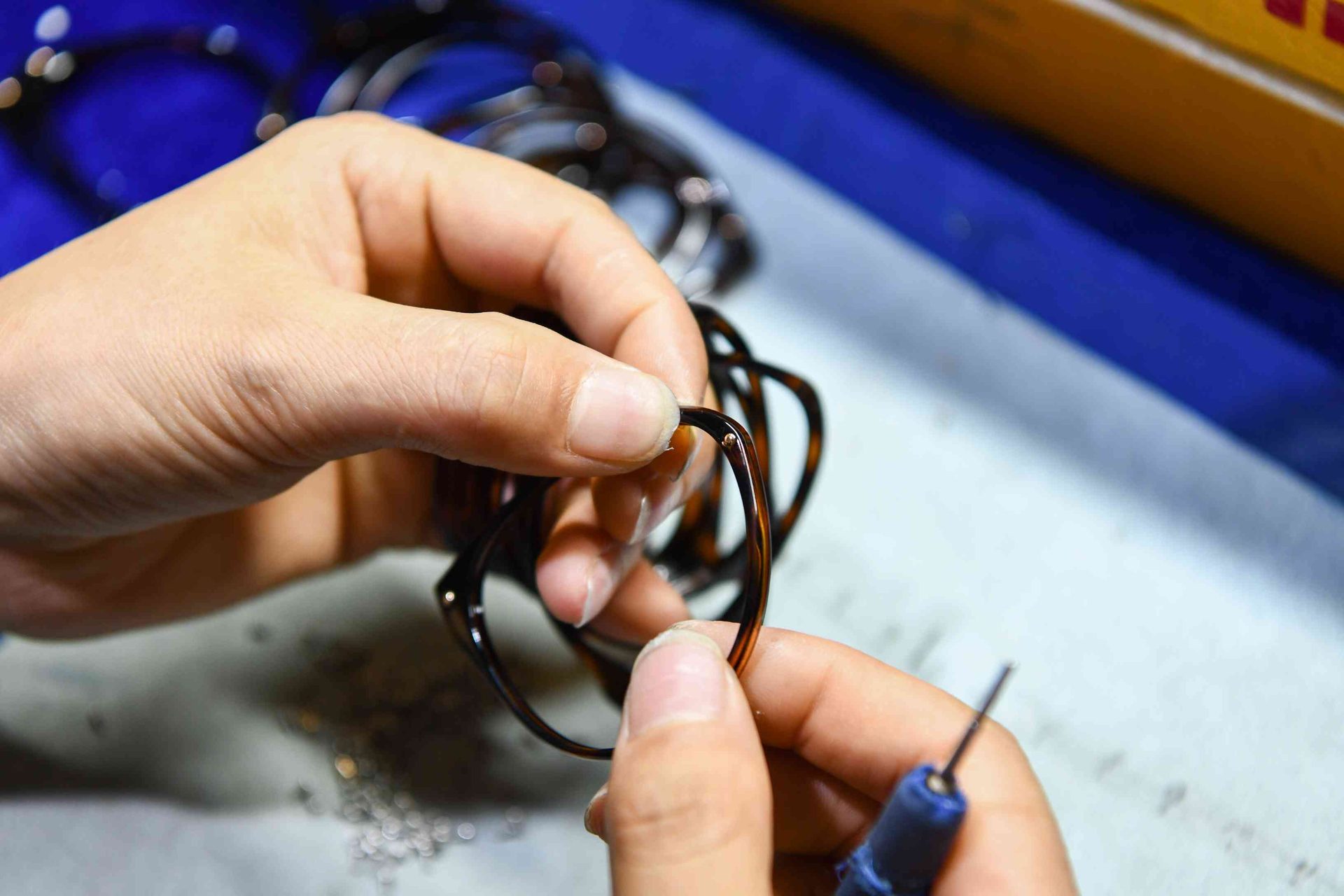
Lens curve affects more than a product’s side profile. It changes how a lens enters the eyewire, where the bevel sits, how much the front wraps around the face and whether a prescription program is practical. If a buyer writes only “6-base lens” in a purchase order, the factory still lacks enough information to build and verify the product.
Direct answer: approve lens base curve, frame curve and wrap as a matched assembly. Define the lens material and optical design, frame and groove geometry, bevel position and intended prescription scope. A complete glazed sample—not a loose lens or an attractive rendering—should be the production reference.
Base curve, frame curve and wrap are different
| Term | What it describes | How buyers should control it |
|---|---|---|
| Lens base curve | Curvature of a principal lens surface | Lens specification, supplier drawing, approved sample and agreed measuring method |
| Frame or eyewire curve | Curvature built into the frame front or each eyewire | Front-view and top-view drawing, fixture or approved frame front |
| Wrap or face-form angle | How the right and left lens planes turn around the face | Defined landmarks and method on the assembled frame |
| Pantoscopic angle | Vertical tilt of the lens plane relative to the wearing position | Side-view specification and fit review |
| Bevel position | Where the lens-edge bevel sits relative to front and back surfaces | Edge profile, groove match and glazed boundary sample |
These values interact, yet one cannot be calculated reliably from another without the full geometry. Even suppliers may use curve labels differently. Put the measurement method, reference points and tolerance on the drawing instead of relying on a verbal curve name.
What a flatter or more curved system changes
| Design direction | Typical product effect | Main sourcing risk |
|---|---|---|
| Flatter front | Straighter fashion profile; often easier to pair with conventional optical programs | Lens can appear too flat for the eyewire or show uneven gaps if geometry is mismatched |
| Moderate curve | Balanced contour for many optical and sunglass designs | Assumed compatibility between stock lenses and a custom groove |
| High wrap | More side coverage and a performance-oriented silhouette | Prescription limitations, decentration effects, lens-edge interference and assembly stress |
This is not a quality ranking. A flatter frame is not inherently cheaper or less protective, and a highly wrapped frame is not automatically better for sport. Coverage, optical performance, retention and compliance must be evaluated for the actual design and use. For tint, UV, polarization and lens-category decisions, use the separate sunglasses lens guide.
Why lens and frame geometry must be developed together
A lens that is too flat for the eyewire may resist seating, pull the frame out of shape or leave an inconsistent cosmetic gap. A lens that is too curved can rock, sit proud, expose the bevel or concentrate stress at particular points. Excessive force during glazing can damage a coating, chip an edge, distort a thin frame or create residual stress that is not obvious in a catalog photo.
The groove and bevel are part of the system. Groove depth, width and angle; lens edge thickness; bevel placement; frame material; and mounting method all affect retention. Full-rim acetate, injected, metal, semi-rimless and rimless products therefore need different instructions. Record these details in the eyewear tech pack, along with the exact approved lens reference.
Prescription wrap needs an optical decision
When a lens is worn with substantial horizontal wrap or vertical tilt, its relationship to the eye differs from a lens held in a flatter position. A qualified optical laboratory may need to account for the prescription, monocular centration, fitting height, vertex distance, wrap and pantoscopic angle when selecting or calculating the lens design.
For a collection that will accept prescription lenses, settle these questions early:
- Is the product plano sunwear, ready readers, optical eyewear or a prescription-capable sunglass frame?
- Which prescription range and lens designs does the intended laboratory support in this frame?
- What minimum edge thickness, usable diameter and bevel position are required?
- Which fitting measurements must the dispenser collect for the finished design?
- Will a demo lens, plano production lens and prescription lens use the same curve and edging instructions?
Do not advertise broad prescription compatibility from frame appearance alone. Laboratory capability and dispensing obligations vary by market, lens design and prescription.
What to put in an OEM specification
A production-ready brief should include:
- product use and target market;
- plano, reader or intended prescription scope;
- lens material, construction, color and optical features;
- target base curve or physical master, plus measurement method and tolerance;
- frame-front curve, wrap and pantoscopic angle with defined landmarks;
- eyewire groove or mounting geometry and the required bevel profile;
- lens shape data, datum, centration reference and orientation marks where needed;
- cosmetic limits for gaps, bevel visibility, edge polish and lens projection;
- retention, stress and performance checks appropriate to the construction;
- an approved, dated and signed complete sample.
The familiar eye–bridge–temple numbers do not capture these variables. Use the eyewear size guide for nominal frame dimensions, then add top and side geometry to make the specification buildable.
A six-step sampling workflow
- Define the use case. Separate fashion sunwear, optical frames and performance wrap products; each creates different optical and fit questions.
- Align frame and lens suppliers. Exchange the lens drawing or master, frame CAD, groove section and intended glazing method before final tooling.
- Build a representative glazed sample. Use production-intent frame and lens materials, not only temporary demo lenses.
- Review from three directions. Check the front silhouette, top-view wrap, side tilt, edge reveal, temple opening and contact with cheeks or lashes.
- Verify function. Assess seating, retention, frame stability and the agreed optical or performance requirements. Use a qualified lab where testing or prescription validation is required.
- Freeze the boundary sample. Sign the complete assembly and store the drawing, lens code, measurement record and approved deviations together.
Follow the broader custom eyewear sampling process so every correction is versioned and traceable.
Bulk quality-control checklist
During production and pre-shipment inspection, compare random finished units with the approved glazed sample. Check:
- correct right and left lens, orientation, color and treatment;
- uniform seating around the eyewire, with no unintended gap or exposed bevel;
- symmetric wrap, lens projection and pantoscopic position;
- no cracked edge, coating damage, pressure mark or distorted frame front;
- secure retention without movement under the agreed handling check;
- consistent overall width, temple opening and stable resting position;
- optical and performance results tied to the correct production lens and destination market.
Add design-specific defects and acceptance criteria to the eyewear pre-shipment inspection checklist. Avoid inventing a universal force, cycle or tolerance: the valid method and limit depend on the material, mounting system, intended use and applicable standard.
Compliance note for destination markets
Lens curve does not replace product compliance. Depending on whether the product is fashion sunwear, prescription eyewear, readers, children’s eyewear or protective equipment, different optical, mechanical, chemical, labeling and documentation requirements may apply. Standards and legal obligations also change by destination market.
Before production, confirm the current classification and test program with the importer, responsible economic operator, qualified optical laboratory or compliance adviser in the sales market. The eyewear certifications guide is a starting point, not market-specific legal advice.
For a useful engineering review, send HAO Eyewear the frame drawing, lens reference, intended use, target market and prescription plan. Discuss your OEM/ODM eyewear project before the lens curve and front geometry are locked.