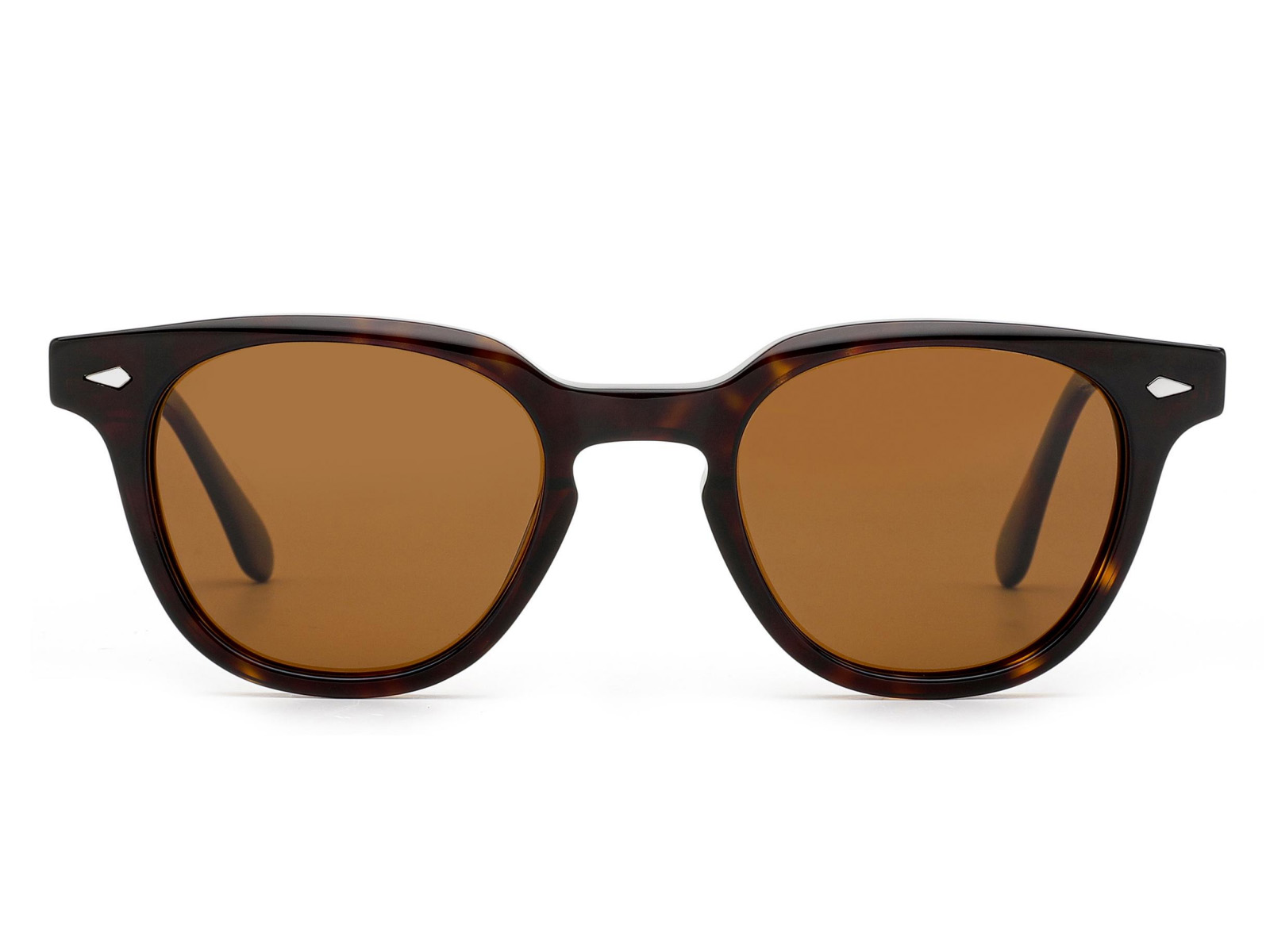
Sports goggles should be selected as protective systems, not as fashion frames with thick lenses. The correct model depends on the sport, impact source, player age and face geometry, prescription, retention method, ventilation, UV exposure and any helmet or faceguard used with it.
If you have not chosen a specific sport yet, use the product selector below. It narrows the field before you compare color, price or branding.
Fast selection rule
Sport and hazard → applicable standard → size → prescription architecture → frame/strap retention → fog and grip performance.
Polycarbonate or Trivex may be appropriate lens materials, but a material name alone does not establish the performance of the finished protector.
Find your sports goggles
| Filter | Choose this starting configuration | Verify before purchase |
|---|---|---|
| Basketball, soccer or fielding in baseball | Close-fitting eye guard with a secure adjustable strap | Applicable sport standard, orbital coverage, lens retention, smooth contact surfaces |
| Cycling | Wraparound glasses-style frame or shield | UV evidence, wind/debris coverage, low distortion, helmet compatibility, wet grip |
| Motorcycle road use | Helmet-compatible eyewear, goggles or visor system | Local road law, high-speed stability, seal, field of view, anti-fog performance |
| Child athlete | Youth-specific size with adjustable retention | Current facial measurements, impact documentation, clearance from the eye, growth checks |
| Adult athlete | Adult size selected by face width—not the word “adult” | Bridge stability, side coverage, pressure points, headgear compatibility |
| Prescription wearer | Direct Rx, prescription insert or OTG system | Rx range, centration, minimum thickness, approved glazing and test configuration |
| Frequent contact or rapid direction changes | Strap-style goggles | Strap adjustment range, wet retention, buckle location, frame stability |
| Running, cycling or lower-contact outdoor use | Glasses-style sports frame | Temple grip, wrap, ventilation, UV protection and activity-appropriate impact evidence |
This page helps buyers compare product families. For a standards-first decision process, also read How to Choose Protective Sports Eyewear.
Shop sports goggles by sport
The word “sports” does not define one hazard. A basketball is large and relatively deformable; a baseball is smaller and harder; a bicycle exposes the eyes to wind, insects and road grit; motorcycling adds speed and legal helmet requirements. One universal goggle is rarely the best answer.
Basketball sports goggles
Basketball eyewear needs stable orbital coverage because hazards arrive from a ball, fingers and elbows at changing angles. A strap helps prevent displacement during jumping and contact. Look for:
- evidence for the complete protector under the applicable basketball standard;
- a frame that does not create hard, sharp contact points toward the face;
- lens retention designed to resist inward release;
- adequate clearance between lens, eyelashes and eye area;
- a wide field of view for peripheral players and passes;
- a size that remains centered when the wearer sweats.
ASTM F803-25 covers protectors for basketball, baseball and soccer. It includes optical and mechanical requirements and applies to wearers with and without corrective lenses. The tested model and configuration matter: an aftermarket lens or structural change may not be represented by the original report.
Soccer sports goggles
Soccer combines ball impact, accidental hands, elbows, falls and frequent head movement. Retention and smooth external geometry deserve as much attention as lens material. Confirm the eyewear is permitted by the league or referee rules, especially if it includes rigid projections, exposed buckles or unusual padding.
A dark outdoor lens may improve comfort in sunlight, but tint does not establish UV or impact performance. Request evidence for each claim separately.
Baseball sports goggles
The required protection changes by position. The National Eye Institute recommends a helmet with an attached faceguard when batting and sports goggles when fielding. A sports goggle protects the eye region; it does not replace head or face protection required for batting, catching or other positions.
For youth baseball, confirm how the eyewear fits under the helmet before ordering a team quantity. Temple pressure, strap routing and frame movement can change when the helmet is added.
Cycling sports goggles and glasses
Cycling buyers often need wraparound sports glasses rather than sealed ball-sport goggles. Priorities include:
- clear peripheral vision;
- coverage from wind, insects, branches and road debris;
- UV400 or documented 99–100% UVA/UVB protection;
- secure nose and temple grip when wet;
- ventilation at low speed and during stops;
- compatibility with the helmet, straps and retention system;
- suitable clear, tinted, photochromic or interchangeable lenses.
The National Eye Institute recommends a helmet plus sunglasses or clear glasses for wind and insects. That recommendation should not be converted into an unsupported claim that every cycling frame is certified for high-energy impact.
Motorcycle goggles
Motorcycle eyewear must be considered together with the helmet and local road rules. A glasses-style frame may fit beneath a full-face helmet; an open-face helmet may require a secure goggle or approved visor system. Evaluate:
- stability at road speed;
- coverage against wind and high-speed debris;
- peripheral and downward vision;
- lens fogging during stops;
- seal pressure and ventilation;
- strap routing around the helmet;
- compatibility with communication equipment;
- day/night lens legality and visible-light transmission.
Do not treat an occupational marking as a substitute for a motorcycle or helmet requirement. Confirm the rules in the market where the product will be sold and used.
Adults versus kids: size is a safety variable
Kids sports goggles are not defined only by brighter colors or a shorter strap. Children can have a narrower frame width, lower or different bridge contact, smaller orbital dimensions and less tolerance for pressure. Their fit also changes as they grow.
| Fit point | Adult selection | Child selection |
|---|---|---|
| Overall width | Match temple-to-temple facial width without spreading or squeezing | Avoid oversized frames that move during running or leave side gaps |
| Bridge | Stable contact without sliding | Check low/narrow bridges and avoid the frame riding into the eye area |
| Orbital coverage | Cover the eye region without blocking useful peripheral vision | Preserve coverage and lens-to-eye clearance on a smaller face |
| Temples or strap | Enough range for the head and helmet | Shorter adjustment range may be needed; loose tail should be controlled |
| Padding/contact area | Even pressure across intended zones | Soft, cleanable contact surfaces; no concentrated pressure during growth |
| Recheck interval | Recheck when prescription, helmet or weight changes | Recheck regularly as the face and prescription develop |
The U.S. National Eye Institute states that ordinary glasses, sunglasses and contact lenses do not protect children from sports eye injury and recommends sport-specific protective eyewear. It also notes that most protective eyewear can be made to match a prescription.
Age labels such as “6–10” or “youth” are only starting points. The final decision should be based on measurements and movement testing.
Plano, prescription, insert or OTG?
Plano sports goggles
Plano means the protective lens has no corrective power. It is the simplest architecture for athletes who do not need vision correction or who safely use contact lenses. Contacts correct vision but provide no physical eye protection.
Direct prescription sports goggles
In a direct-Rx system, the corrective lenses are installed in the protective frame. Benefits include a clean field of view and fewer internal surfaces. Product developers must control:
- supported sphere, cylinder and prism ranges;
- monocular pupillary distance and fitting height;
- base curve and wrap compensation;
- center and edge thickness;
- bevel geometry and lens retention;
- lens material and coating compatibility;
- whether the tested configuration includes that prescription construction.
A plano sample passing a test does not automatically validate every high-minus, high-plus or prism prescription installed later.
Prescription insert
An insert places smaller corrective lenses behind a plano protective shield. It can simplify shield replacement and allow several outer tints to share one prescription. Trade-offs include two additional optical surfaces, reduced internal clearance and more opportunities for fogging, reflections or cleaning difficulty.
OTG sports goggles
OTG means “over the glasses.” The goggle fits over everyday prescription spectacles. It is useful for shared equipment or occasional use, but only when both frames remain correctly positioned. Check that the outer protector does not push the everyday frame toward the face, disturb its optical alignment or create temple pressure under a helmet.
Glasses-style frames versus strap-style goggles
Glasses-style sports frames
These use temples like conventional glasses, often with wraparound geometry and rubberized tips. They are convenient to put on and generally ventilate well. They suit cycling, running and lower-contact activities when their documented performance matches the hazard.
Possible limitations include movement during heavy contact, pressure under helmets and lateral gaps on some faces.
Strap-style sports goggles
These replace temples—or supplement them—with an adjustable elastic strap. They are commonly preferred for ball and contact sports because retention can remain more stable during rapid movement.
Inspect the whole system:
- adjustment should cover the intended head-size range;
- the strap should resist slipping when wet;
- anchors and buckles should not create dangerous hard points;
- tension should stabilize rather than deform the frame;
- replacement straps should be available;
- helmet use should not redirect the strap or lift the frame.
Some modular products convert between temples and a strap. If compliance is claimed, ask whether every supplied wearing configuration appears in the test documentation.
What are goggle glasses?
Goggle glasses is a consumer search phrase, not a defined technical category. It normally refers to eyewear that looks partly like glasses but adds goggle-like coverage, padding, sealing or a strap. Sellers may use the term for very different products:
- prescription ball-sport eye guards;
- glasses-style protectors with removable straps;
- sealed motorcycle or dust goggles;
- OTG goggles worn over glasses;
- fashion frames styled to resemble goggles.
Because the phrase has no standard performance level, never buy on the term alone. Identify the exact use, standard, tested configuration and fit.
Impact protection: ask for evidence, not adjectives
“Impact resistant,” “shatter resistant,” “unbreakable” and “sports grade” are not interchangeable. The FDA requires spectacle and sunglass lenses sold in the United States to meet its impact-resistance regulation, but also explains that impact-resistant lenses are not shatterproof. That general lens requirement is not the same as a sport-specific test of the complete protector.
For a claimed sports standard, request:
- the exact standard number and edition;
- model name, size and product drawing;
- lens material, thickness and prescription/plano configuration;
- frame, strap and component configuration;
- test laboratory, report number and date;
- results or pass/fail conclusion for the applicable tests;
- required permanent markings;
- limitations and approved replacement parts.
ASTM currently lists separate standards for some activities, including F3164 for racket sports, F2713 for field hockey, F3077 for women’s lacrosse and F1776 for paintball. This is why a generic statement such as “meets ASTM” is incomplete.
Lens and frame materials
Polycarbonate lenses
Polycarbonate is widely used because it is light and highly impact resistant. It is a practical starting material for plano and many prescription sports designs. A suitable hard coat can improve scratch resistance, while anti-fog treatments address condensation.
Trivex lenses
Trivex is another lightweight, impact-capable material used in prescription applications. Depending on the lens design and laboratory, it may offer attractive optical and processing characteristics. Availability, thickness and price vary.
Frame materials
Injection-molded polyamide, TR90-family materials, polycarbonate, TPU components and selected elastomers may be used in performance eyewear. Material labels do not predict finished-product performance by themselves. Geometry, aging, temperature, molding control, lens groove, strap anchors and assembly tolerances all matter.
Never market any sports goggle as “unbreakable.” Define the supported test claim instead.
Anti-fog and ventilation
Fog control is not one coating. It is a system involving lens temperature, humidity, facial seal, airflow, exertion and cleaning.
Compare products using:
- direct, indirect or controlled ventilation appropriate to the hazard;
- anti-fog test method and result;
- performance after cleaning and environmental conditioning;
- coating compatibility with disinfectants or cleaners;
- internal air volume and lens-to-face distance;
- helmet and mask interaction;
- replacement-lens instructions.
More ventilation can reduce fog but may admit dust, liquid or debris. A ball-sport goggle, cycling frame and chemical-splash goggle should not use the same ventilation assumptions.
Anti-slip design and all-day comfort
Anti-slip performance comes from fit plus materials—not from adding rubber at random. Evaluate:
- nose geometry and contact area;
- hydrophilic or textured nose components;
- temple-tip grip and clamping force;
- strap width, stretch recovery and adjuster security;
- total weight and front-heavy balance;
- pressure after 20–30 minutes, not just at first try;
- performance with sweat, sunscreen and hair.
Soft components must also be durable, cleanable and securely attached. Excessively soft padding can compress until the rigid frame approaches the eye area.
How to measure sports goggles
Use millimeters and record the wearer’s current eyewear and facial measurements.
- Face width: Measure horizontally across the face at the level where the frame will sit. Compare it with the product’s total front width.
- Bridge fit: Note whether the wearer has a high, low, narrow or wide bridge. Bridge stability is more useful than a nominal bridge number alone.
- Eye and orbital position: Check that each eye sits within the intended lens zone and that the rim covers the orbit without approaching the eye.
- Lens width and height: Confirm sufficient field of view and vertical clearance for eyelashes and cheeks.
- Temple length: For glasses-style frames, compare hinge-to-tip length and helmet interaction.
- Head circumference: For strap models, measure around the intended strap path and confirm usable adjustment range—not only unstretched strap length.
- Existing frame reference: Record the eye–bridge–temple numbers from a well-fitting pair, but do not assume they transfer directly to a curved sports frame.
Dynamic fit test
After initial fitting, have the wearer:
- look fully left, right, up and down;
- shake and rotate the head;
- jog, jump and bend forward;
- add the actual helmet or faceguard;
- check for frame movement, blocked vision and pressure;
- wear the product long enough to reveal fogging and discomfort.
The protector should stay centered without overtightening. For a child, repeat the test as the face grows or the prescription and helmet change.
Product configuration matrix for brands and distributors
| Collection | Suggested architecture | Lens options | Commercial checks |
|---|---|---|---|
| Youth ball-sport | Small orbital frame, soft contact zones, adjustable strap | Plano, direct Rx or insert | Size grading, strap range, color coding, replacement parts, applicable sport test |
| Adult ball-sport | Medium/large sizes, secure strap, wide field | Plano and Rx | Multiple bridge fits, lens retention, sweat stability, documentation by size |
| Cycling performance | Wrap frame or shield, grippy temples/nose | Clear, tint, UV, photochromic, polarized where appropriate | Helmet fit, optical distortion, lens interchange, ventilation |
| Motorcycle/off-road | Helmet-compatible goggle, controlled seal and strap | Clear/tint options appropriate to local rules | Road/off-road distinction, visible-light transmission, anti-fog, strap routing |
| OTG/prescription program | Deep internal volume or certified insert architecture | Plano shield plus Rx carrier | Rx range, alignment, dual-surface fogging, optical-lab instructions |
For OEM/ODM development, define the intended use and required evidence before choosing colors or logos. A practical specification should include:
- target sport, age/size range and market;
- applicable standard and edition;
- required sizes and dimensional tolerances;
- plano, direct-Rx, insert or OTG architecture;
- lens material, base curve, thickness, tint and coatings;
- frame material, strap construction and replaceable components;
- helmet and equipment compatibility;
- marking, packaging, warnings and instructions;
- approved sample and change-control process;
- third-party testing and production quality plan.
Cosmetic changes may be low risk, but changing frame geometry, lens material, thickness, groove, strap anchor or prescription construction can affect performance. Review changes before relying on an earlier report.
Final buying checklist
- The product is defined by sport and hazard, not only by the phrase “sports goggles.”
- The applicable standard and current governing-body rules are identified.
- Documentation matches the exact model, size and lens configuration.
- Adult or youth sizing is confirmed with measurements and movement testing.
- Prescription architecture and supported Rx range are documented.
- The frame or strap remains stable when wet and in motion.
- Side, brow and lower-orbit coverage are appropriate.
- Field of view and optical quality are acceptable.
- Ventilation and anti-fog performance match the activity.
- UV, tint and polarization claims have separate evidence where relevant.
- The eyewear works with the actual helmet or faceguard.
- Replacement lenses, straps, care instructions and warnings are available.
Build a sports goggle collection with HAO Eyewear
HAO Eyewear supports brands, optical retailers, wholesalers and distributors with OEM/ODM frame development, private-label customization, material and lens-option planning, prototypes, packaging and production coordination.
For a sports goggle project, send us the target sport, adult or youth size range, target country, required standard, prescription needs, forecast quantity and reference design. We can review the commercial and manufacturing requirements and help define a practical sample and testing plan. Certification claims should always be based on the final product’s applicable evidence.
Discuss your sports eyewear project or review our TR90 material options.
Authoritative references
- ASTM F803-25: Eye Protectors for Selected Sports
- ASTM Sports and Recreation Standards
- National Eye Institute: Sports and Eye Safety for Parents and Teachers
- National Eye Institute: Protective Eyewear by Activity
- FDA: Impact-Resistant Lenses—Questions and Answers
Standards, league rules and regulations change. Confirm the current edition and local requirements before specifying, marketing or purchasing protective equipment.