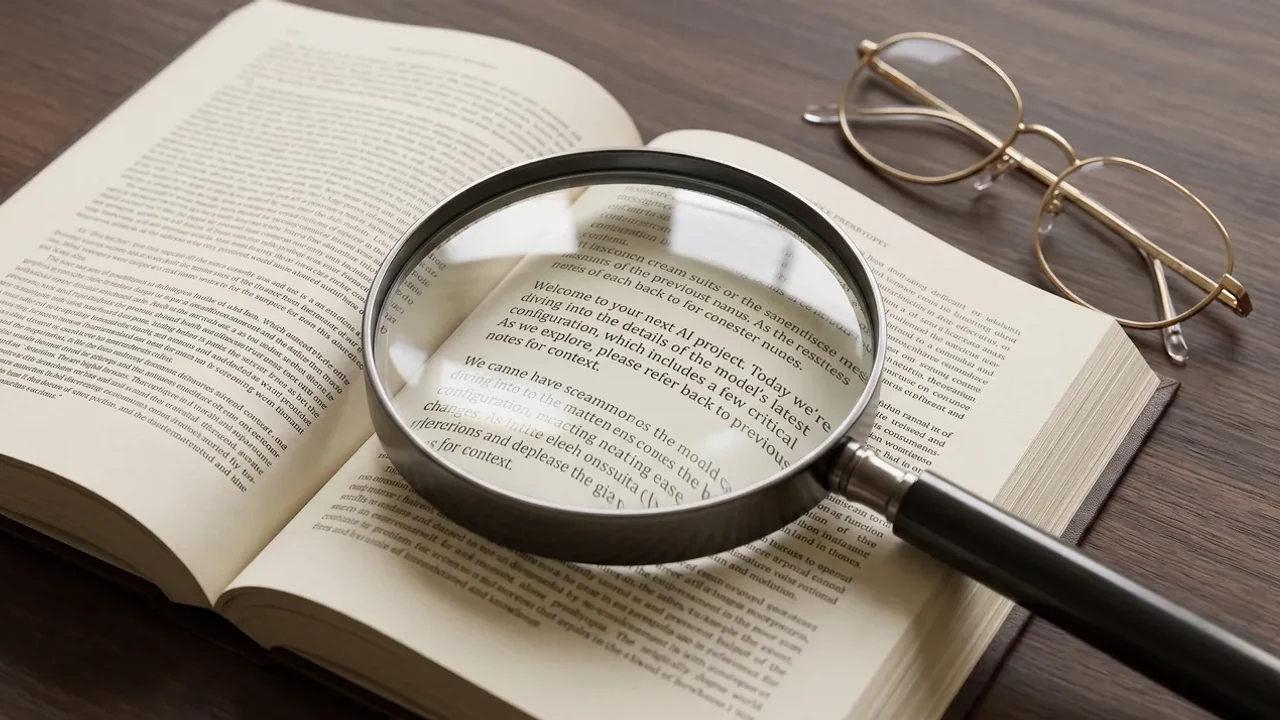
A magnifying glass is used to make small, nearby details appear larger. Its most familiar jobs are reading fine print and examining tiny objects, but the same simple optical tool is also useful in inspection, repair, collecting, crafts, education, nature study and some low-vision activities.
The short answer: use a handheld magnifying glass when you need a quick, enlarged view of one small area. For long reading sessions or work that needs both hands, reading glasses, a stand magnifier, an illuminated magnifier or a wearable system may be more practical.
Magnifying glass uses at a glance
| Use | Typical examples | Helpful feature |
|---|---|---|
| Reading fine print | Medicine labels, menus, maps, serial numbers | Wide lens and built-in light |
| Close inspection | Jewelry, coins, stamps, fabric, print | Clear optics and good edge detail |
| Precision repair | Watches, circuit boards, model parts | Higher power or hands-free support |
| Crafts and hobbies | Needlework, painting miniatures, carving | Stand or wearable magnifier |
| Science and education | Leaves, rocks, insects, lens experiments | Durable lens and simple handle |
| Quality control | Scratches, seams, coatings, small defects | Distortion control and neutral light |
| Low-vision support | Short labels and other near tasks | Correct power, lighting and professional guidance |
How does a magnifying glass work?
A standard magnifying glass is a convex, or converging, lens. When the object sits inside the lens’s focal length, the lens forms a virtual image that is upright and larger than the object. Your eye receives the light at a greater visual angle, so the detail appears bigger. This is the same basic principle described in OpenStax’s guide to the simple magnifier.
The strongest view does not come from holding the lens anywhere at random. Move the lens toward or away from the object until the image becomes sharp. A stronger lens generally has a shorter focal length, which normally means:
- more apparent enlargement;
- a shorter working distance;
- a smaller field of view;
- greater sensitivity to hand movement and lens position.
This trade-off matters. The highest number on a package is not automatically the easiest magnifier to use.
12 practical uses of a magnifying glass
1. Reading small print
A magnifying glass can enlarge ingredient lists, medicine packaging, appliance labels, maps, menus, receipts and instruction manuals. An illuminated model can improve contrast when the surrounding light is poor. For medication directions, always confirm critical information rather than guessing from an unclear view.
2. Checking identification numbers
Tiny model numbers, electronic component markings, hallmarks and product serial numbers are easier to locate with targeted magnification. This is a classic “spot task”: the user needs to inspect a few characters, not read an entire page.
3. Examining coins, stamps and collectibles
Collectors use magnification to look at mint marks, perforations, printing patterns, wear, surface scratches and other identifying details. Clear, low-distortion optics are usually more useful than extreme magnification because they preserve a larger view of the item.
4. Inspecting jewelry and gemstones
Magnification helps reveal hallmarks, settings, scratches and craftsmanship. Professional jewelers often use a loupe rather than a large handheld lens because a loupe offers higher power in a compact format. A magnifying glass remains useful for a broader overview.
5. Repairing watches and small mechanisms
Watch components, screws, gears and miniature model parts can be difficult to align with unaided vision. A stand-mounted or head-worn magnifier is often preferable here because both hands remain free for tools.
6. Inspecting electronics
Technicians and hobbyists use magnification to check solder joints, printed circuit board traces, connector pins and component labels. Good lighting and a stable mount matter as much as magnification when judging a very small defect.
7. Sewing, needlework and miniature crafts
Threading needles, following dense patterns, painting miniatures and assembling models all benefit from a larger view. A clamp-on, stand or wearable magnifier reduces the need to hold a lens throughout the task.
8. Studying plants, insects and rocks
A magnifying glass is a portable first step into nature observation. It can reveal leaf veins, insect structures, crystal texture and surface patterns that are hard to see unaided. It enlarges surface detail; it does not replace a microscope when cellular or very high-power observation is required.
9. Classroom optics demonstrations
A convex lens provides a direct way to explore focus, focal length, refraction and image formation. Because it can concentrate sunlight into a hot point, any sunlight demonstration requires close adult supervision. OpenStax notes that focused sunlight can be intense enough to burn paper in its explanation of image formation by lenses.
10. Print, textile and surface inspection
Printers, textile workers, restorers and product inspectors can use magnification to view dot patterns, fibers, coating consistency, small scratches and finishing defects. For repeatable commercial inspection, the organization should define lighting, magnification, viewing distance and acceptance criteria instead of relying only on subjective judgment.
11. Navigation and outdoor detail checks
Small symbols on printed maps, compass markings and equipment scales are easier to read under magnification. Keep the lens covered or stored when not in use outdoors so it cannot accidentally focus direct sunlight onto a flammable surface.
12. Supporting some low-vision activities
The U.S. National Eye Institute lists a magnifying lens as one option for reading and other close activities, alongside brighter lighting and digital accessibility settings. It also recommends professional vision rehabilitation when impaired vision interferes with everyday life. See the NEI’s low-vision guidance.
A magnifier can make a task more accessible, but it does not diagnose or treat the condition causing reduced vision. A sudden change in vision, eye pain, distortion or ongoing difficulty with everyday tasks calls for professional assessment.
Is a traditional magnifying glass always the best choice?
No. A handheld magnifier is excellent for brief, targeted tasks, but it occupies one hand and must stay near the correct focal distance. Its visible area also becomes smaller as magnification rises.
| Tool | Best for | Main limitation |
|---|---|---|
| Handheld magnifying glass | Prices, labels and quick inspection | Occupies one hand and can shake |
| Stand magnifier | Reading or viewing at a stable distance | Less portable |
| Illuminated magnifier | Low-contrast detail and dim settings | Requires batteries or power |
| Electronic magnifier | Adjustable size, contrast and screen viewing | Higher cost and charging needs |
| Reading glasses | Longer near work with both hands free | Fixed power; not suitable for every vision need |
| Wearable/head-mounted magnifier | Crafts, repair and precision work | Narrower field at higher power; fit matters |
The choice depends on the task, duration, working distance, required field of view, lighting and the user’s vision. A product that is comfortable for a price label may be frustrating for a full newspaper page.
Magnifying glass vs. reading glasses
These tools overlap, but they are not identical.
- A magnifying glass enlarges the image of a limited area. The user controls the working distance by moving the lens or object.
- Reading glasses add optical power for near focus while sitting at a consistent distance from the eyes. They leave both hands free and usually provide a wider working area.
- Wearable magnifiers cover a broad category, from magnifying spectacles to head-mounted hobby systems. Their power and working distance should match the task.
If your goal is comfortable, repeated reading rather than occasional spot inspection, start with our guide to reading glasses and diopter powers. Buyers and retailers can also compare HAO Eyewear’s reading-glasses range.
How to choose a magnifying glass
Use this five-point checklist:
- Define the task. Reading a label, examining a stamp and soldering a board require different tools.
- Choose only as much power as needed. Excess power reduces field of view and working distance.
- Check usable lens area. A broad lens helps reading; a compact high-power lens helps inspect one tiny detail.
- Improve the light. Even illumination can make detail easier to see without increasing magnification.
- Test comfort and stability. For longer tasks, a stand or wearable design may reduce hand and arm fatigue.
Marketing terms such as “10×” are not always measured or presented consistently across products. For professional procurement, request the test method, optical power, clear aperture, working distance, lens material, distortion expectations and lighting specification.
Safety: two rules that matter
- Never look at the Sun through a magnifying glass. A converging lens concentrates light and can cause severe eye injury.
- Do not leave a magnifier uncovered in direct sunlight. Focused sunlight can heat or ignite nearby material. Store it in a case or away from windows and direct sun.
Children should use magnifying glasses under appropriate supervision, especially outdoors.
The practical takeaway
A magnifying glass is a versatile tool for making small, nearby details easier to see. Handheld models excel at quick spot tasks; stand and wearable magnifiers help with longer or hands-on work; reading glasses are often the more convenient choice for repeated near reading.
For B2B buyers developing a private-label reading-glasses range, HAO Eyewear can support frame, power-curve, branding and retail-packaging decisions that are already represented in our product offering. Discuss a reading-glasses project with our team.
Sources and review notes
This article was reviewed against:
- OpenStax: The Simple Magnifier — convex-lens image formation and angular magnification.
- OpenStax: Image Formation by Lenses — focal length, optical power and concentrated sunlight.
- National Eye Institute: Low Vision — magnifying lenses for close activities and when to seek vision rehabilitation.
Educational information only; it is not medical advice or a substitute for an eye examination.